
If a driver hit you while you were riding legally, you have every right to be on that road, no matter what the driver or their insurance company says.
A North Port bicycle accident lawyer at Hale Law defends injured cyclists and pushes back on the reflex to blame the person on the bike. We represent riders hurt across North Port and Sarasota County, and there is no fee unless we win money for you.
Too often the story starts with "the cyclist came out of nowhere." Usually, the cyclist was exactly where the law allowed them to be.
Call Hale Law at 1-800-800-1414 for a free case review. You pay nothing unless we recover for you.
Our firm is dedicated to getting excellent results that help you get back on your feet after a serious injury.
Do cyclists have the same right to the road as cars in Florida?
Yes. In Florida, a person on a bicycle has the same rights and duties as the driver of a vehicle, and understanding that is the foundation of any bike crash claim.
You are not a guest on the road. You belong there.
This is spelled out in Florida Statute 316.2065, which treats cyclists as legitimate road users with the right to a travel lane. Drivers who act as though bikes should not be there are the ones breaking the rules.
That legal footing changes the conversation with an insurer. When they suggest you should not have been riding on US-41 or Sumter Boulevard, the law says otherwise. A lawyer who knows the statute can hold a careless driver responsible instead of letting the blame slide onto you.
What is Florida's 3-foot passing law?
It is a law that requires drivers to give cyclists at least three feet of space when passing. This single rule is behind a large share of serious bike crashes, because so many drivers ignore it.
Under Florida law, a driver overtaking a bicycle must pass at a safe distance of no less than three feet.
When a driver buzzes past a cyclist too closely and clips them or forces them off the road, that is not just bad driving. It is a violation that becomes direct evidence of fault in your injury claim.
The three-foot rule matters most on the fast, narrow roads where North Port cyclists and drivers share space. Proving a driver failed to give that room can be the turning point in a case, and it is one of the first things we investigate.
Clipped by a car that passed too close? Call 1-800-800-1414.
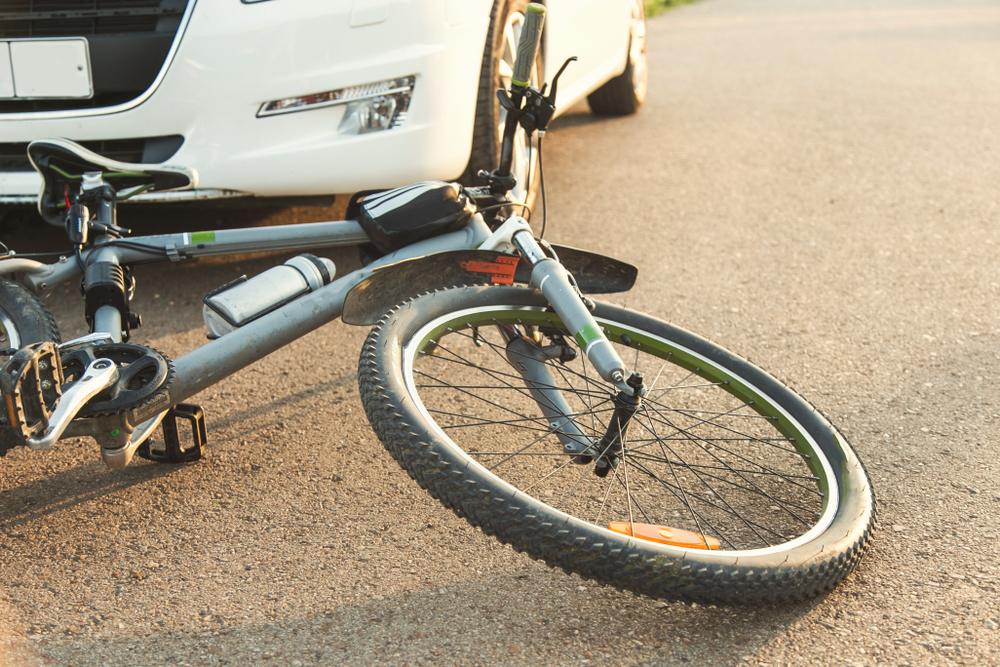
How do most car-versus-bicycle crashes actually happen?
Most are not random. They follow a handful of predictable patterns, and naming the pattern often points straight to the driver's mistake. These are not situations where a cyclist "darted out." They are failures to look and yield.
The most common ones we see include:
- The right hook, where a driver passes a cyclist and then turns right across their path.
- The left cross, where a driver turning left fails to yield to a cyclist coming straight through.
- Dooring, where someone opens a car door directly into a rider's path.
- The unsafe pass, where a driver squeezes by without the required three feet of space.
Each of these puts the fault on the driver's failure to yield, look, or pass safely. Insurers know these patterns too, which is why they move quickly to reframe them as the cyclist's error.
Identifying what actually happened, through witness accounts, video, and the physical evidence, is how we keep the blame where it belongs.
Why are North Port's roads risky for cyclists?
Because North Port draws a lot of riders onto roads that were built for fast-moving cars. The area's cycling culture and its traffic growth have collided, and that tension shapes the crashes we handle.
Southwest Florida is a year-round cycling region, and the Legacy Trail has made the area a hub for recreational riders.
But riders do not stay on the trail. They connect to it and run errands on open roads like US-41, the Tamiami Trail, along with Sumter Boulevard and Price Boulevard, where traffic moves fast and driver attention runs thin.
Many local cyclists are retirees riding for fitness, which can mean more serious injuries when a crash happens.
Add North Port's rapid growth, with more vehicles on the same roads every year, and low-angle Florida sun that leaves drivers squinting at dawn and dusk, and the risk climbs. The National Highway Traffic Safety Administration tracks how these factors drive bicycle crashes nationwide.
Knowing the local conditions helps us reconstruct what a driver should have seen and done.
Who pays after a North Port bicycle accident?
Usually the at-fault driver's insurance, and sometimes your own auto policy, even though you were on a bike. Sorting this out early keeps your medical bills from going unpaid while the claim develops.
The main source is the driver's bodily injury coverage, or BI, which pays for the harm they caused.
On top of that, if you own a car, your personal injury protection, or PIP, can pay a limited amount of your early medical bills even when you are struck while cycling. If the driver had little or no insurance, or fled the scene, your uninsured motorist coverage, or UM, may step in.
We identify every policy that applies so nothing available is left on the table.
What is a North Port bicycle accident claim worth?
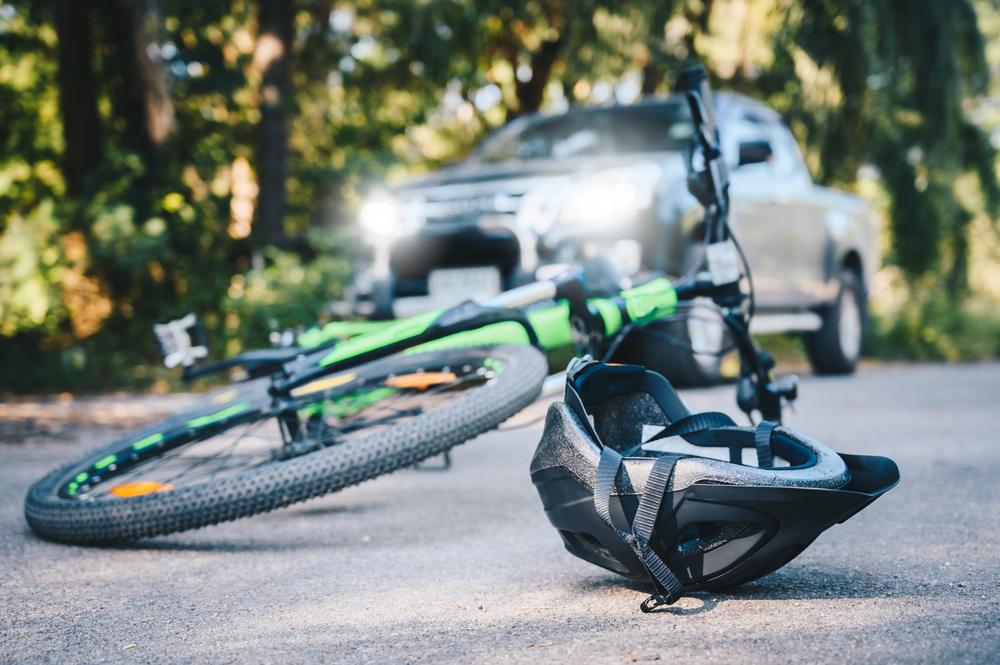
It depends on the severity of your injuries, and cyclists rarely walk away from a collision unhurt. With nothing but a helmet between them and a vehicle, riders often suffer broken bones, road rash, and head or spinal injuries, so these claims can carry real value.
A complete claim generally accounts for:
- Medical care now and in the future
- Income lost during recovery
- Any lasting reduction in your ability to work
- Damage to your bicycle and gear
- The physical pain and emotional impact of the crash
When a bicycle accident causes a death, certain family members may bring a wrongful death claim under Florida law.
The insurer's first offer rarely reflects the full arc of a serious cycling injury, especially a head injury whose effects show up over time. We build the complete picture before talking numbers.
What should you do after a bicycle crash in North Port?
Get medical attention first, then protect the evidence that proves the driver, not you, caused the crash. Cyclists are blamed so often that good documentation becomes your best defense.
Seek care right away, and be especially alert to head injuries. A helmet reduces harm but does not prevent a concussion, and the effects of a brain injury can surface hours or days later. A prompt medical record also links your injuries to the collision.
At the scene, if you are able, capture the details before they scatter:
- Photograph the vehicle, its license plate, the driver, the roadway, and the damage to your bicycle.
- Get names and phone numbers from anyone who saw it happen.
- Do not repair or throw out your damaged bike, helmet, or gear. That damage is physical evidence of how hard the impact was.
Be careful about what you say. Do not apologize or accept blame at the scene, even out of politeness, and do not give the driver's insurance company a recorded statement before talking to a lawyer.
Florida's shared-fault rule, found in Florida Statute 768.81, lets an insurer chip away at your recovery for any blame they can assign to you, so a careless word can cost real money.
Finally, make sure the crash is reported to police, and reach out to a lawyer quickly so any nearby video can be preserved before it is recorded over.
Want help protecting your side of the story? Call 1-800-800-1414 today.
Frequently asked questions about North Port bicycle accidents
I was not wearing a helmet. Does that ruin my claim?
No, not by itself. Florida does not require adult cyclists to wear helmets, so riding without one is not illegal for adults and does not automatically bar your claim.
An insurer may argue it contributed to a head injury, but that is a fight, not a foregone conclusion, and it does not erase the driver's responsibility for causing the crash in the first place.
The driver says I came out of nowhere. What now?
That claim rarely survives a real investigation. Drivers often say they never saw the cyclist, but not seeing someone you had a duty to watch for is a failure, not an excuse.
Witness statements, nearby cameras, and the positions of the vehicles usually tell a different story than the driver's first account. Do not accept the blame just because the driver assigned it to you.
What if it was a hit-and-run and the driver got away?
You may still have a path to recovery. A hit-and-run leaves no at-fault driver to pursue directly, but your uninsured motorist coverage, or UM, is built for this exact situation and may pay for your injuries.
Police and video sometimes identify the driver later as well. A fleeing driver does not automatically mean you are left with nothing.
How long do I have to file a bicycle accident claim in Florida?
Generally two years from the date of the crash. Florida shortened this deadline in 2023, so older information may be out of date.
Because video from nearby homes and businesses is often erased within days, and witness memories fade, contacting a lawyer quickly helps preserve the evidence your claim depends on.
Do I have to be in a bike lane to have a case?
No. Florida law gives cyclists the right to use the road, not only marked bike lanes, and riding outside a bike lane does not hand fault to you. On many North Port roads there is no bike lane at all, so riders must share a travel lane, which is entirely legal.
A driver still has to pass safely and yield when required. Where you were riding may become part of the discussion, but it does not decide the case, and it does not excuse a driver who hit you.
What if I was riding on the sidewalk when a car hit me?
You may still have a claim. In Florida, cycling on the sidewalk is generally allowed where no local rule forbids it, and a cyclist on a sidewalk or in a crosswalk has protections similar to a pedestrian.
Many collisions happen when a driver pulls out of a driveway or turns across a sidewalk without looking for a rider. The driver's duty to watch for and yield to people crossing does not disappear just because you were on a bike.
What if I was riding at night without lights when I was hit?
You may still have a claim, though it can affect the fault analysis. Florida does require a bicycle ridden after dark to have a front lamp and a rear reflector, so riding without them may let the insurer argue you share some blame.
That does not erase a driver's duty to watch the road and pass safely. Whether any fault falls on you, and how much, is argued with evidence, not decided automatically by an adjuster.
Talk to a North Port bicycle accident lawyer at Hale Law
The heart of it is simple. You had the right to that road, and a driver's carelessness does not become your fault just because they say so.
Someone needs to prove what really happened, and the sooner that starts, the stronger your case.
Hale Law stands up for injured cyclists across North Port and Sarasota County, with no fee unless we win money for you. Tell us how the crash happened, and we will give you an honest read on where you stand.
Call Hale Law now at 1-800-800-1414, or reach out through our contact form for a free case review.